The Impact We Don't Always See
I came across a piece from Sahil Bloom not too long ago about the “Stonecutter Principle,” which is so relatable to the work I do.
In case you’re not familiar with the story - a quick recap: three stonecutters doing the same work but describing it very differently: cutting stone, building a wall, building a cathedral.
Same work, different stories, very different experiences.
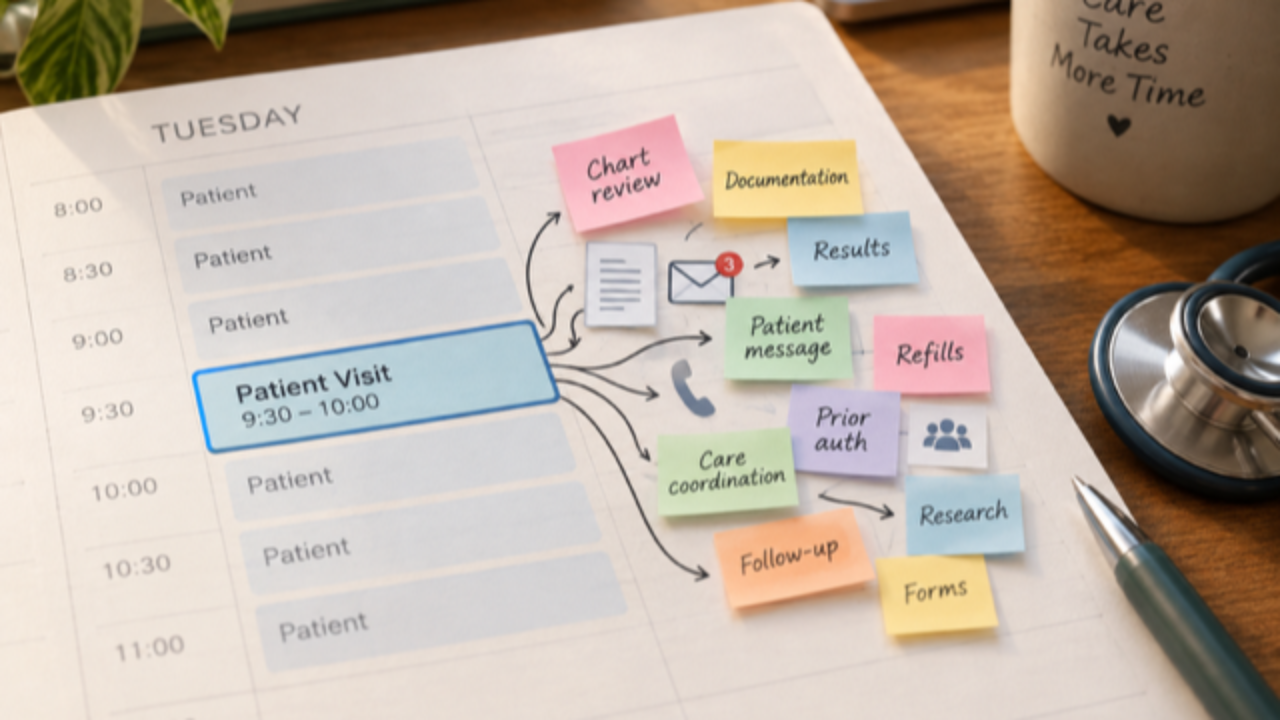
The monotony of some parts of our work can narrow our narratives to be "Box checkers" "Data entry" or "Form filler-outer." And that's when we lose the thread, the line of sight to the bigger impact.
The reason the stonecutters resonate with me is I experienced one of those moments that changed how I see parts of our work.
My dad was 82, living alone on his farm, with a metastatic lesion to his hip. Manageable…until it wasn’t.
The pain escalated to the point he couldn’t walk without severe pain. He couldn’t get to the bathroom without bracing himself or care for his animals.
He ended up in the ED, was discharged with pain meds, and returned home—only to be stuck in his recliner again.
It only hurt if he moved his leg. So he just…didn’t move.
My brother-in-law was able to get there to help and they called his primary care physician.
And this is when my view of forms changed.
She took that one call, without seeing him in person, and did the heavy lift to get him a wheelchair, a shower chair, and the equipment he needed.
You know what all that entails.
The forms, the boxes, the back-and-forth. Another one of those things that show up in your inbox at the end of a long day.
The things I used to call “indirect patient care.”
Within days, he had the wheelchair.
And everything changed.
He could move again. Get outside. Cook. (He made my brother-in-law chili. Priorities intact. 😉)
You could hear it in his voice. See it in his posture.
Same work, different story, Dad’s story.
That experience changed my language.
There was nothing “indirect” about that impact.
I started referring to it as asynchronous patient care. Care that happens outside the room, outside the visit, but still impacts someone’s health and quality of life.
I don’t suddenly love administrative work.
But now, I can remember my dad in that chair, then back in his kitchen. And it reconnects the task to the outcome, the line of sight to the cathedral.
So when the work starts to feel like “just one more thing,” it’s worth a brief pause. Not to force a better attitude.
But to Reflect:
What might this actually be building for someone?
You may never see the result. But it’s there.



Responses