Part Two: Damage and Discovery
Among the casualties of our move was a beautiful glass hourglass that normally sits on my desk. It was a small, beautiful thing, given to me by a friend and doing exactly what it was supposed to do – beautifully measure time.
I think it's great comedic timing that the (now shattered) hourglass showed up during the week I'd been trying so hard to protect my time.
You may remember I had gotten to acceptance of things not being ready, but I did have a tightly packed schedule. Container arrival, movers unpack, we unpack and arrange, Dad's room prepared, car recalls and maintenance while I finished my presentation, Dad's arrival, big presentation, then relaxing time with him with work tucked in when convenient.
I planned it all – and, well – likely no surprise, the plan broke.
That's life though, right? We arrange our time as though the hours belong to us. We move things around, protect blocks on the calendar, make contingencies, and try to create enough space for everything that matters.
And then painters are in the way, rooms are crowded with construction debris, a flight gets delayed and the ensuing hurried replanning happens. The kitchen is unpacked, the presentation is only partially done, your dad ends up at the wrong hotel during his flight delay. And hourglasses get broken.
Our carefully constructed plans for time are…well, fragile.
As I paused for a minute in the chaos and looked at the broken hourglass, I noticed even broken glass can glimmer in the light.
When plans fall apart, that can become the opportunity. Instead of only focusing on the pieces on the floor, how do we remember to look for the glimmer?
But first, the damage report.
And, as promised last week, there was plenty to report.
The shop that was supposed to receive much of our stuff was nowhere near ready. The morning the container arrived, my husband, son-in-law, project manager, and others made five trips to the dump just to get it cleared enough to unload.
Because so much of the house was still being painted or worked on, much of what was supposed to be put away had to go into the shop, now relabeled “storage building,” instead. My husband still can't unpack his tools – which we desperately needed a few times.
There were construction surprises. Stair nosing that doesn't match the floor. A pocket door that no longer fits. Exterior mishaps…
And I have to mention, there were the rounded tile-edge pieces I had specifically requested for the wall edging, but had been told apparently could not be found anywhere in Washington, or possibly the country.
During the cleanup, my husband found a giant stash of them.
In our shop.
Enough, perhaps, for 20 bathrooms and kitchens. And hence, the reason no one could find them in Washington - we had all of them. 🤦🏼♀️
The move itself had casualties, too. The hourglass. A broken leg on a favorite footstool. A lamp that needs repair. A wedding dress and several gowns somehow packed at the bottom of a regular box instead of hanging in the wardrobe boxes we had specifically requested.
Meanwhile, my 86-year-old dad's flight was delayed enough that he would miss his connection. Suddenly the Sunday morning I had protected for my presentation preparation became two hours of figuring out an overnight hotel, shuttle logistics, wheelchair assistance, and how to get him safely through an unfamiliar airport the next morning.
And the work on another financial issue I had also delegated to Sunday? The file I opened during the time I had carved out to review it wasn't actually the complete spreadsheet I needed.
By Sunday, there simply wasn't a way to keep every ball in the air.
It was a lot.
But that's not the whole report.
My daughter, who lives nearby, put in several 13-hour days helping us. When we were ready to abandon a box or a room because it felt too overwhelming, she would start pulling things out. "Where does this go?," "Why are you keeping this? I'll put it in the donate pile."
She folded things. Organized things. Kept us moving.
Her theory was simple: finish a room. You'll feel better.
She was right.
And somewhere in the exhaustion, the three of us got very good at dividing and conquering.
We stopped having the energy for lengthy debates about exactly where a picture should hang or how something should ultimately be arranged. Sometimes one of us simply had to say, "You decide," and walk into another room to do something else.
None of us could care about everything at once. We became really well-versed in "good enough for now,” and “whatever you think."
The full report would be too long, but suffice it to say:
A friend's antique curio cabinet, with impossibly thin rounded glass that I had worried about all the way from Alaska, arrived in pristine condition.
Our movers were extraordinary: hardworking, patient, professional, and unfailingly kind, even when I sheepishly told them that the very heavy box they had just carried downstairs actually needed to go back upstairs.
The kitchen became functional as did the laundry room. Two bedrooms, two closets, and a bathroom ready.
The house is very livable. And Monday's presentation?
It was nowhere near as ready as I wanted it to be. I confessed that to the executive leadership team before I started and then I gave it anyway.
It communicated what I needed it to communicate. They gave me the feedback I needed. I learned what they wanted emphasized before the board presentation.
In other words, the dry run did exactly what a dry run is supposed to do – despite its unfinished state.
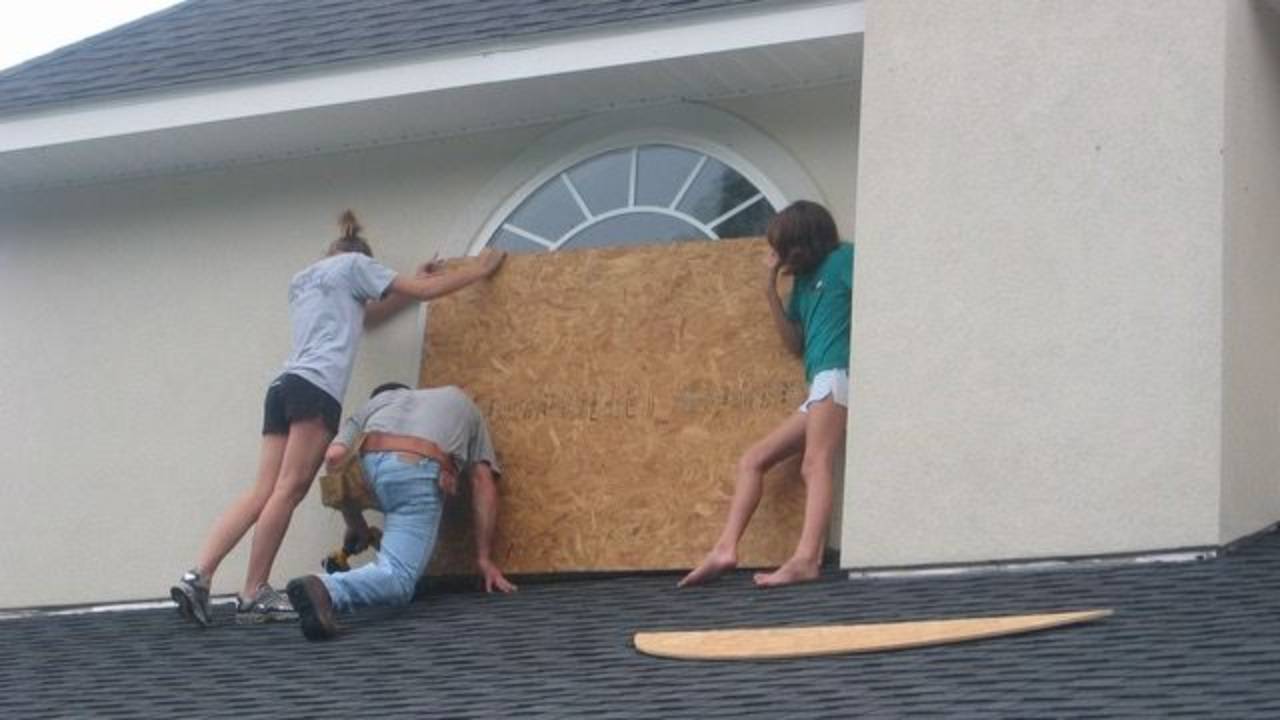
So, the storm didn't magically turn out to be no big deal. There was stress. Things broke. Some things are sitting in a shop waiting for construction completion and us to have the time and energy to deal with them.
Initially, I was only counting the damaged items. Somewhere along the way, I realized that wasn't a complete inventory. I needed to notice what was still intact, too.
What if we did this professionally? When there is a census surge, a workforce shortage, a schedule that falls apart. Or when interview season threatens to drown everyone or Match Day suddenly leads to SOAP.
Those storms are real. So are the stress, disappointment, exhaustion, and uncertainty that come with them.
We don't have to pretend otherwise.
But when the wind dies down, or even while we're still standing in it, perhaps we can take a more complete inventory and not lose sight of the things still working, the people still showing up, the gratitude for the things that held.
Reflection:
Think about the last storm you weathered: What held?
If you're in the middle of one now: What can be good enough for now?
What outcome can you let go of, at least for the moment?
And who can you ask to stand with you while you weather it?




Responses